
Friday, February 28, 2014
When many are strugling for water, miscarriage because of carrying water and scared of water supply in the future, somepeople thinking of developing road through the water catchmet areas. may be if we do not disturb water catchment area we can help to save water for the future. Remember hill forests can keep 70% of rain water and release slowly for livng organisms.


What make this article came out? We need to check and give solution to our society. May be we need to watch more football and learn how to be a refree.
http://www.themalaysianinsider.com/sideviews/article/the-melayu-academics-are-just-jealous-rip-van-winkle

They're almost all "professors", a title I figure you could purchase from any 7-Eleven store at any time of day, or from Umno's 1Kedai branches or indeed print them out in any public lavatory, to use a kinder word.
And they are all – surprise, surprise – Melayus. It is rare I would come across a non-Melayu academic these days.
Kematian Akibat Denggi Meningkat 263%: Where are the scientists? Virus or mosqitous? OR the carrier?
http://my.news.yahoo.com/video/kematian-akibat-denggi-meningkat-263-025900652.html


Scientists find egg of bird presumed extinct: The fact it has taken until 2014 for scientists to observe one of these tiny eggs reflects how much we still don't know about New Zealand's natural environment and particularly for marine species
http://my.news.yahoo.com/scientists-egg-bird-presumed-extinct-093404361.html
Wednesday, February 26, 2014


Friday, February 21, 2014
Wednesday, February 19, 2014
Dengue Fever Prevention: Vaccinating Mosquitoes With Bacteria To Protect People: BUT may be the best is to avoid mosquitoes bite person who have fever and transfer virus to others. NOT just kill the mosquitoes.
http://www.huffingtonpost.com/2011/08/24/bacteria-dengue-control-mosquito-vaccine_n_935141.html

a pair of Australian studies published on Wednesday in the journal Nature, injecting a harmless bacterium into mosquitoes that can be passed on to the insects' offspring could thwart the ability of the dengue virus to replicate.
Scientists are investigating the mechanisms by which the dengue virus causes disease by focusing on understanding dengue pathogenesis, the virus itself, and vector biology. two important approaches to control dengue may be by controling vectors and educating public on dengue symptoms. Vaccin for dengue may be difficult because of characteristic of dengue virus itself. More research needed.


Malaysia has gained an international reputation for being one of the best countries in the world to eat out on a budget. For Malaysians, this may seem less true, as in recent years, price increases have meant that eating out in 2014 is not as cheap as eating out was in 2010. We look at whether it is still possible to continue with the lifestyle choice of eating out within a decent budget in Malaysia: Long time ago people talked about food supply, cheap, fresh and healthy. We have to look at high quality food not in term of business. Many are talking about opportunity for making money rather than services. More research on food are needed. Biology and engineering may be an important fields for food.

" I'm sorry, it was my anger that started this"."Mummy, I love you. I'm sorry, it was my anger that started this. Love, Ammar. P.S, I will always love you," : Learn from these sentences; may be easy to speak out and take actions BUT it can destroy the family. May be the young generation can learn from this event not too excited blaming the government and move towards wrong steps, Wrong move will destroy your country and make your life and others suffer for long time. Sometimes no chance to recover. Just learn and remember.
http://www.thestar.com.my/News/Nation/2014/02/18/Sweden-msian-couple-child-abuse-trial-begins/
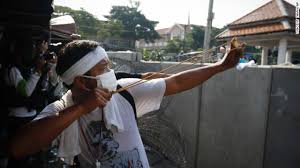
Think far before take a stupid actions
Taps in parts of Seremban dry up, NS govt says situation is critical: Not a new statement BUT repeating from past events and locations. We must learn from our experiences. We know forest keeping 70% of water from rain and release slowly to lower ground, evaporation and surface runoff. So why we are cutting forest and do not know how to calculate how much rainfall, how much water kept in forest and hill and mountain and how much the water released to rives and sea and evaporated in the air. Just a simple mathematics. BUT still we cannot calculate well. NGO such as Malaysian Nature Society is very concerned and continuously reminding the authorities.

Between 8am on Monday and 8am 8 February 2014, the states with the most fires were Perak (70), Selangor (66), Kedah (63), Malacca (39), Johor (28) and Penang (26): We must learn this experiece; information, education, control, technology, public awareness and volunteerism. Climate change, season change, action must change too.

Monday, February 17, 2014
Toddler killed, mother hurt in elephant attack (latest news 15 February 2014) : Repeated cases in Peninsular Malaysia where human settlement bordering reserve forest and habitat or withink the elephats homerange. We need to identify their habit and mark their areas where necessary to avoid this kind of accident. We need to have an alert systems for the farmers.

Sunday, February 16, 2014
in order to attract more young generation into science and natural sciences, more activities such as essay, mini project competition and seminars with a proper appreciation at national and international levels. Many developed countries are doing this in order to promote science in their country. Government and GLC must support this kind of activities systematically every year.

Malaysia is unique and cannot compare with other countries in the world. The spirit of living together in harmony must be continued. New generation must understand the history and fighting hard for the stability economically, politically and social aspect of culture, religion and lifestyle. Only Malaysian can understand and do not let others telling us what to do for our country. Do not listen to politician BUT listen to social activists/NGOs.
Firemen facing a hard time in putting out fire at Gunung Tempurung: Due to new landscape, human activities and climate change, related agencies must look far forward how to face forest fire. Small hills, moutain, isolated forest, bordering forest reserve, plantation and residential areas have different approaches of fighting fire. We need facilities and technologies. What happen to wildlife and specific biodiversity such as limestones hills.

Saturday, February 15, 2014
If we ask public to report today to the one center or email address with pictures and location, I believe hundreds of sites in Malaysia. Why this thing happened wheresa we have rules, regulation, enforcement, public awareness etc. As I mentioned many times, right person should do the right thing at the right place. We must work as team to solve this illegal solid waste dumping.


Conservation and developing young scientists must be continuous effort and creative to attract young generation. Many ways we can do. through MNS, MNS-KPA programmes and International networking, we can expose the young generation to international arena in conservation and develop their interest and confidence.


Dengue issues continues: Just need some understanding in biology and ecology of aedes and every body play roles. Do we still need experts to advise? May be the medical doctors advise to go to clinic when we feel uncomfortable, high temperature or difficulty in breathing. The ecologist or entomologist may be ask all resident to control mosquitoes. Many version. All must understand roots cause and working together
A continuous conflict: Who are suppose to take care the local issues such as land or coastal development. District office and Local Authority must aware about the environmental issues and always refer to the right authorities. The officers incharge must understand about the environment and gaxxeted areas. If Kuala Gula is gazzeted as birds sanctuary therefore any activities that can disturb birds ecology and biology must be taken care, Refer to the experts.

Friday, February 14, 2014


Wednesday, February 12, 2014
This year MNS (Malaysian Nature Society) World wetlands Day promoting Kuala Selangor Nature Park (KSNP) as another Ramsar Site. Need more support from public and government agencies!!!
From Wikipedia, the free encyclopedia
World Wetlands Day occurs on February 2, every year.
World Wetlands Day 2014: Wetlands and agriculture. How Malaysia can promote agriculture and wetland management. Developing Communication, Education, Participation and Awareness (CEPA) as a powerful tool for the conservation and wise use of wetlands. Every 2 February each year is World Wetlands Day, the Convention's annual campaign day.


Opportunity, services and business: All must go for profit. Creativity is important. Many like to get the opportunity will grab the offer and this will open to new opportunities in business and making profit.

Thursday, February 6, 2014

Wednesday, February 5, 2014
Students need ‘HOT’ skills : SO much has been said about HOT or higher-order thinking. What is HOT and why is it important for our students to be equipped with HOT skills?
http://www.thestar.com.my/Opinion/Letters/2014/02/05/Students-need-HOT-skills/
Teachers should be trained on the pedagogical knowledge of HOT and not just on how to develop HOT questions
A revised Bloom Taxonomy would be a suitable reference not only when developing HOT questions but also when making preparation to infuse HOT skills into content instructions.
The Education Ministry should make serious efforts to locate the experts in this particular field of pedagogical knowledge and hire them to ensure that the implementation of HOT in the classrooms would result in students who can perform HOT skillfully to solve problems
Skillful thinkers cannot be developed just by giving students HOT questions.
The teachers should first infuse thinking skills into content instruction before such questions are posed to them.
Teachers should be trained on the pedagogical knowledge of HOT and not just on how to develop HOT questions
A revised Bloom Taxonomy would be a suitable reference not only when developing HOT questions but also when making preparation to infuse HOT skills into content instructions.
The Education Ministry should make serious efforts to locate the experts in this particular field of pedagogical knowledge and hire them to ensure that the implementation of HOT in the classrooms would result in students who can perform HOT skillfully to solve problems
Skillful thinkers cannot be developed just by giving students HOT questions.
The teachers should first infuse thinking skills into content instruction before such questions are posed to them.


Monday, February 3, 2014


When you are sick and when you are dying then you start thinking about your self and what you are missing. See what nurse reveals the top 5 regrets people make on their deathbed
http://worldobserveronline.com/2013/11/17/nurse-reveals-top-5-regrets-people-make-deathbed/?utm_source=taboola&utm_medium=referral

1. I wish I’d had the courage to live a life true to myself, not the life others expected of me.
2. I wish I didn’t work so hard.
3. I wish I’d had the courage to express my feelings.
4. I wish I had stayed in touch with my friends.
5. I wish that I had let myself be happier.
Sunday, February 2, 2014
Why Malaysia cannot be infront in this idea of Blue Economy. We talk about Blue Ocean Strategy, may be now about time we talk about Blue Economy. We are top twelve biodiversity in the world, we are facing more natural desaster in the future and many more challenges. So why not we are ready with this Blue Economy.
The Blue Economy: 10 years - 100 innovations - 100 million jobs is a book by Gunter Pauli. The book expresses the ultimate aim that a Blue Economy business model will shift society from scarcity to abundance "with what we have", by tackling issues that cause environmental and related problems in new ways. The book highlights potential benefits in connecting and combining seemingly disparate environmental problems with open-source scientific solutions based upon physical processes common in the natural world, to create solutions that are both environmentally beneficial and which have financial and wider social benefits. The book suggests that we can alter the way in which we run our industrial processes and tackle resultant environmental problems, refocusing from the use of rare and high-energy cost resources to instead seek solutions based upon simpler and cleaner technologies. The book aims to inspire entrepreneurs to adopt its insights, by demonstrating ways in which this can create economic benefits via job creation, reduced energy use, and more revenue streams from each step of the process, at the same time benefiting the communities involved. 'The Blue Economy' is presented in 14 chapters, each of which investigates an aspect of the world's economies and offers a series of innovations capable of making aspects of those economies sustainable
.


Saturday, February 1, 2014
Last year, Australia was praised all over the world for creating the biggest marine reserves. This year, the world is looking at Australia - and particularly Western Australia when a controversial shark culling policy designed to prevent attack. Any shark longer than three metres (10 feet) snagged by the lines and deemed to be a threat - including great white, bull and tiger sharks - will be destroyed. Even great scientists in Australia agree, may be with a complete survey and fully understand their ecology and biology of shark in their coastal waters/

Great whites are protected under the Australian Environment Protection and Biodiversity Conservation Act, but federal Environment Minister Greg Hunt granted an exception on public safety and economic grounds.

