
Sunday, July 26, 2015
Endless discussion if we do not solve the basic problems: Public education on basic ecology. We Malaysian or any develop countries are poor in material, knowledge and thinking. At the same time we do not want to learn and sacrifice. We like to let our self to be bullied. Those greedy people they do not care about others, they just care about their pocket.


Thursday, July 23, 2015

Wednesday, July 22, 2015


Why we keep talking, complaining and asking about the same questions. We already know that when land are cleared for timber, agriculture or urbanisation, we exposed the land surface to rain and caused surface erosion. Then caused sedimentation and make river shallow and give strong ecological impact.

Monday, July 20, 2015
Global Education Dialogues: Universities as agents of social change: Universities yield benefits for society far beyond the individual financial returns to graduates and human capital gains for the economy. Universities contribute to communities through knowledge and skill generation but what is their role as agents of social change? What is the social value of a university to its locality, its community, its nation? How can universities help with social mobility, promote fairness and inclusion, greater democratic engagement, public outreach and access to cultural resources? In the future, what is the role of a university in creating prosperity and stability while ensuring and leading in equity? As universities push for greater sustainability, how can they continue to create shared public value?


if you want to know more about lectures and professors visit my blog by typing lecturer job or professor. More to learn especially the management and board of directors of the universities. Many of them do not know about the university's lecturers then they do not know how to bring university that the are leading forward. they still following the administrators package to run the university. How we can see our university moving towards world class. we need more academic leaders. Dreaming!!!!


Lecturer still not happy with their salary compared to their work load and demand. The professors still demand few things related to their salary:1. review the salary, 2. Automatic promotion from VK7-VK6-VK5 because all professors are excellence, 3. all promoted one grade up before retire. 4. special allowance for research assistance 25K-30K RM for all professors, 5. tutor service counted for retirement benefit. many lecturer cannot complete their 30 years service when the retire at 60.

http://www.beritasemasa.com.my/skim-gaji-pensyarah-universiti-naik


Old issues that never solve because greedy businessman, poor knowledge of politician who representing public and "dont care" attitude among public and locals. The effect is on locals. May be Malaysian think this is another annual event or festival of donation, saving, and another opportunity of big business. Education is important.
https://rubberforests.wordpress.com/tag/latex-timber-clone-forest-management/


Sunday, July 19, 2015


Eid al-Fitr (Arabic: عيد الفطر ʻĪd al-Fiṭr, IPA: [ʕiːd al fitˤr], "festival of breaking of the fast"), also called Feast of Breaking the Fast, the Sugar Feast, Bayram (Bajram), the Sweet Festival or Hari Raya Puasa and theLesser Eid, is an important religious holiday celebrated by Muslims worldwide that marks the end of Ramadan, theIslamic holy month of fasting (sawm). The religious Eid is a single day during which Muslims are not permitted to fast. The holiday celebrates the conclusion of the 29 or 30 days of dawn-to-sunset fasting during the entire month of Ramadan. The day of Eid, therefore, falls on the first day of the month of Shawwal. The date for the start of anylunar Hijri month varies based on the observation of new moon by local religious authorities, so the exact day of celebration varies by locality. However, in most countries, it is generally celebrated on the same day as Saudi Arabia. Eid al-Fitr has a particular Salat (Islamic prayer) consisting of two Rakats (units) and generally offered in an open field or large hall. It may be performed only in congregation (Jama’at) and, has an additional extra six Takbirs(raising of the hands to the ears while saying "Allāhu Akbar", literally "God is greatest"), three of them in the beginning of the first raka'ah and three of them just before Ruku' in the second raka'ah in the Hanafi school of Sunni Islam. Other Sunni schools usually have twelve Takbirs, seven in the first, and five at the beginning of the second raka'ah. This Eid al-Fitr salat is, depending on which juristic opinion is followed, Fard فرض(obligatory),Mustahabb مستحب(strongly recommended, just short of obligatory) or mandoob مندوب(preferable). Muslims believe that they are commanded by Allah, as mentioned in the Quran, to continue their fast until the last day of Ramadan and pay the Zakat and fitra before offering the Eid prayers.


Saturday, July 18, 2015
A pterygium is a thickened layer of tissue that grows onto the clear, outer layer of the eye called the cornea. The thickened tissue forms from the conjunctival layer. The conjunctiva is the normal, transparent membrane that covers the outer surface of the eyeball, excluding the cornea. This growth is more often found on the nasal (inner) side of the cornea. This is the result of sunlight crossing into the eye from the more exposed lateral (outer) side and absorbing onto the nasal side.

http://www.newvisioneyecenter.com/cfiles/procedures_pterygium.cfm

http://www.eyemackay.com.au/pterygium-removal.html

Monday, July 13, 2015

Sir Alex Ferguson's leadership skills may be studied at Harvard, but is he right? Must be something extraordinary in managing MU that we can learn not just for football But may be managing universities.
http://www.independent.co.uk/sport/football/news-and-comment/sir-alex-fergusons-leadership-skills-may-be-studied-at-harvard-but-is-he-right-we-ask-a-panel-of-experts-to-dissect-the-manchester-united-managers-lessons-for-life-8426159.html


Sunday, July 12, 2015
Why avoid styrofoam? Styrofoam contains the chemical styrene, which has been linked to cancer, vision and hearing loss, impaired memory and concentration, and nervous system effects…the list goes on. What happens when you eat hot foods or drink liquids from styrofoam plates and cups is the styrene leaches out of the Styrofoam and into our bodies.
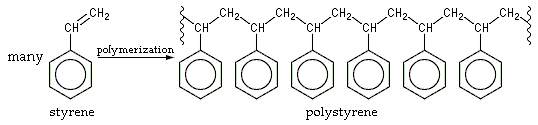
- Styrene: A petroleum byproduct that can be found in plastics, resins, and Styrofoam. It is a toxic chemical that is used to create polystyrene. CD Cases, food service products, and luggage; you name it, this chemical might be there.
- Polystyrene: Created from Styrene, polystyrene is a lightweight, insulating material that can be in both liquid and solid form.
- Styrofoam: This is actually “extruded polystyrene foam,” (EPS) but we just call it Styrofoam. It is made from polystyrene and is used for many things like surfboards, life rafts, bean bags, and of course as disposable plates and cups.

Environmental impacts
In 1986 the EPA released a report that listed the polystyrene manufacturing process as the fifth largest creator of hazardous waste. Fifty-seven chemical byproducts are released during the manufacturing process of polystyrene, polluting the air, land, water and communities that live near the facilities.
As if the public health impact of polystyrene isn’t enough, its environmental effects are well documented. It takes 500 years to decompose, and it takes up 25-30% of our world’s landfills. In addition our lakes, waterways and oceans are suffering thanks to Styrofoam waste. There are 57 chemical by-productsreleased during the manufacturing of Styrene, polluting our air and waterways. Styrofoam is no longer manufactured with CFC (notorious ozone-depleting chemical), but still uses HFCs (hydrofluorocarbons) that are still linked to depleting the ozone layer and affecting global warming.
We stiil need aggressive research on this polystyrene and food container issues. Its become global.
Environmental issues
Main article: Polystyrene § Disposal and environmental issues
Because foam takeout containers are entirely made out of polystyrene foam, these containers have an impact on the environment as they do not biodegradeeasily. However, Methanogenic consortia degrade styrene, using it as a carbon source. Pseudomonas putida can also convert styrene oil into variousbiodegradable polyhydroxyalkanoates. Some cities have gone as far as banning the use of foam take-out containers, notably San Francisco, Seattle and Portland, Oregon. In 2013, the mayor of New York City proposed banning foam food containers, for both health and environmental reasons.

Health issues
It is debated whether styrene may migrate into food which is stored in foam food containers for even a small amount of time. Some researchers argue that polystyrene containers do pose a health risk,[9][unreliable source?] while industry defenders argue that trace amounts of styrene are already naturally present in food. Styrene foam containers can melt if the food or liquid is of a sufficient temperature. Some containers have been tested and labelled for safe use in microwave ovens; although the absence of such labeling does not mean a container is unsafe for this use, caution should still be taken.
Banning polystyrene is not going to happen overnight, of course, because there are a lot of these containers, made of a plastic resin known as expanded polystyrene, floating around. Tons of polystyrene is using every day.

Few states in Malaysia will follow soon BUT can we educate public, business communities and enforce the laws and regulations? We need to have good strategies.
Conflict in using polystyrene as food containers: toxic chemicals and environmental problems.
Based on scientific tests over five decades, government safety agencies have determined that polystyrene is safe for use in foodservice products. For example, polystyrene meets the standards of the U.S. Food and Drug Administration and the European Commission/European Food Safety Authority for use in packaging to store and serve food. The Hong Kong Food and Environmental Hygiene Department recently reviewed the safety of serving various foods in polystyrene food service products and reached the same conclusion as the U.S. FDA.
 The Harvard study reported that styrene is naturally present in foods such as strawberries, beef, and spices, and is naturally produced in the processing of foods such as wine and cheese. The study also reviewed all the published data on the quantity of styrene contributing to the diet due to migration of food packaging and disposable food contact articles, and concluded there is no cause for concern for the general public from exposure to styrene from foods or styrenic materials used in food-contact applications, such as polystyrene packaging and food service containers.
 Polystyrene is commonly used in containers for food and drinks. The styrene monomer (from which polystyrene is made) is a cancer suspect agent. Styrene is "generally found in such low levels in consumer products that risks are low". Polystyrene which is used for food contact may not contain more than 1% (0.5% for fatty foods) of styrene by weight. Styrene oligomers in polystyrene containers used for food packaging have been found to migrate into the food. Another Japanese study conducted on wild-type and AhR-null mice found that the styrene trimer, which the authors detected in cooked polystyrene container-packed instant foods, may increase thyroid hormone levels.


Bauxite, an aluminium ore, is the world's main source of aluminium. It consists mostly of the minerals gibbsite Al(OH)3, boehmite γ-AlO(OH) and diaspore α-AlO(OH), mixed with the two iron oxides goethite and haematite, the clay mineral kaolinite and small amounts of anatase TiO2.China imported 14 times more bauxite from Malaysia in November than in March after an export ban in Indonesia stopped supplies of the ore to the world’s biggest consumer of industrial metals. China bought a total of 2.57 million tons of bauxite last month. Malaysia produced 208,770 tons of bauxite last year, compared with 2,040 tons in 2004, according to data from the Minerals and Geoscience Department in Kuala Lumpur.


