
Monday, March 28, 2016
Part of KPA Youth programme we just organised Youth Nature Camp. Seven universities involved; UPM, UM, UiTM, UIA, UMT UMK and Monash. During the camp I announced MNS will sponsore 10 Environment Research Grants for final year students who gave good proposal related to environment and nature. Each best project will be given RM10,000.00.
We would like to congratulate to the Selangor State Forestry Department for taking action against the illegal encroachment into the Kuala Langat South Forest Reserve and keep the forest in 2010. There were some actions taken such as clear crops, fell oil palm trees and demolish illegal structures by the Selangor government show that the state is committed to protecting the natural heritage of the state. This 5,000 hectares of forest need to be protected and replant the degraded areas with native tree species. We also hope that a system of monitoring can be put in place to prevent further encroachment. Scientists from UKM and UKM are doing research in Langat South found that the forest was extremely rich in species, with a high potential for finding species that had never before been recorded from Malaysia and some which were entirely new to science. We trust that the State government will continue to protect this important forest and thus safeguard this rich biological resource.

Friday, March 25, 2016
Alumni can help their universities through continuous donation. If we have 1000 alumni, one give one thousand ringgit a year, easily we can get one million ringgit in one year. Imaging some university produce 5 thousands in every convocation. After 5 years surely they can donate one thousand ringgit to their old university.


Thursday, March 24, 2016

Tuesday, March 22, 2016
Nasi lemak listed in TIME Magazine’s healthy breakfasts

http://www.thestar.com.my/news/nation/2016/03/22/nasi-lemak-listed-in-time-magazine-healthy-breakfasts/


The Sime Darby Young Innovators Challenge is a programme designed to help youths in Malaysia develop leadership and problem solving skills in the areas of ideation, innovation and entrepreneurship! How to make is sustain and success? need more committed people to participate and hopefully is not a ceremonial one.


Sunday, March 20, 2016

Friday, March 18, 2016
Global warming is making hot days hotter, rainfall and flooding heavier, hurricanes stronger and droughts more severe. This intensification of weather and climate extremes will be the most visible impact of global warming in our everyday lives. It is also causing dangerous changes to the landscape of our world, adding stress to wildlife species and their habitat.
"Global warming is bringing more frequent and severe heat waves, and the result will be serious for vulnerable populations" "That means air pollution in urban areas could get worse, bringing increased risk of heart attacks, strokes and asthma attacks. Children, the elderly, poor, and people of color are especially vulnerable to these effects."

How to Drop Your Core Temperature? The core temperature of the average adult human is normally around 98.6 °F (37.0 °C), but may vary depending upon certain conditions. If you're partaking in physically exerting activities in a hot environment, or sometimes just exposed to a hot environment for a prolonged period of time, your body temperature could rise to dangerous levels. If your body temperature reaches 104°F (40°C), you could experience heatstroke. Dropping your temperature too low can be equally dangerous, however, with only a three degree reduction in body temperature (95°F, or about 35°C) needed to induce hypothermia. Lowering your core temperature for short periods of time can help you avoid heat stroke, improve sleep, or reduce a fever, but it's important to know how to do this safely.
http://www.wikihow.com/Drop-Your-Core-Temperature


How Does a Heat Wave Affect the Human Body? Heat exhaustion is a relatively common reaction to severe heat and can include symptoms such as dizziness, headache and fainting. It can usually be treated with rest, a cool environment and hydration (including refueling of electrolytes, which are necessary for muscle and other body functions). Heat stroke is more severe and requires medical attention—it is often accompanied by dry skin, a body temperature above 103 degrees Fahrenheit, confusion and sometimes unconsciousness. http://www.scientificamerican.com/article/heat-wave-health/

11 Facts About Heat Waves. https://www.dosomething.org/facts/11-facts-about-heat-waves
- A heat wave is a prolonged period of excessive heat, often combined with excessive humidity.
- Excessive heat is determined by Heat Index Values. The heat index, also known as the apparent temperature, is what the temperature feels like to the human body when relative humidity is combined with the air temperature.
- Summers in North America are hot, meaning most parts of the US experience heat waves during the summer. The region east of the Rockies tend feel heat waves with high temperature and humidity.
- If your pet stays outdoors during extreme heat, make sure they have cold water and an area out of the sun where they can cool off. For pets, spending time in a hot car can be super dangerous.
- Extreme heat can cause cramps, swelling, and fainting.
- Heat waves kill more Americans than other natural disasters such as floods, lightning, tornadoes, and hurricanes.
- Young children and adults over the age of 65 are most likely to experience heat exhaustion or other heat-related illness.
- In July 1995, Chicago, Illinois experienced a heat wave that caused over 700 deaths. Scientists predict that the Midwest could endure similar heat waves up to 3 times a year by 2100 if greenhouse gas emissions continue to increase.
- Urban areas often experience higher temperatures during the summer, referred to as “Urban Heat Island.” This is due to buildings, roads, and other infrastructures absorbing solar energy, resulting in higher temperatures.
- Heat waves can cause blackouts and power outages, especially in areas that experience the urban heat island effect.
- To stay hydrated during a heat wave, drink plenty of water and eat a salty snack to help replace the salt the body loses when it sweats.
A heat wave is a prolonged period of excessively hot weather, which may be accompanied by high humidity, especially in oceanic climate countries.
https://en.wikipedia.org/wiki/Heat_wave

Wednesday, March 16, 2016
Do cows pollute as much as cars? Agriculture is responsible for an estimated 14 percent of the world's greenhouse gases. A significant portion of these emissions come from methane, which, in terms of its contribution to global warming, is 23 times more powerful than carbon dioxide. The U.S. Food and Agriculture Organization says that agricultural methane output could increase by 60 percent by 2030 [Source: Times Online]. The world's 1.5 billion cows and billions of other grazing animals emit dozens of polluting gases, including lots of methane. Two-thirds of all ammonia comes from cows.
http://animals.howstuffworks.com/mammals/methane-cow.htm


Research on ruminant for reducing GHG is important.

About 62% of the world’s tropical peat lands occur in the Indomalaya region (80% in Indonesia, 11% in Malaysia, 6% in Papua New Guinea, and pockets in Brunei, Vietnam, the Philippines, and Thailand. The spongy, unstable, waterlogged, anaerobic beds of peat can be up to 20 m deep with low pH (pH 2.9 – 4) and low nutrients, and the forest floor is seasonally flooded.[7] The water is stained dark brown by the tannins that leach from the fallen leaves and peat – hence the name blackwater swamps. During the dry season, the peat remains waterlogged and pools remain among the trees.

A carbon footprint is historically defined as "the total set of greenhouse gas emissions caused by an [individual, event, organisation, product] expressed as CO2e. A measure of the total amount of carbon dioxide (CO2) and methane (CH4) emissions of a defined population, system or activity, considering all relevant sources, sinks and storage within the spatial and temporal boundary of the population, system or activity of interest. Calculated as carbon dioxide equivalent (CO2e) using the relevant 100-year global warming potential (GWP100).
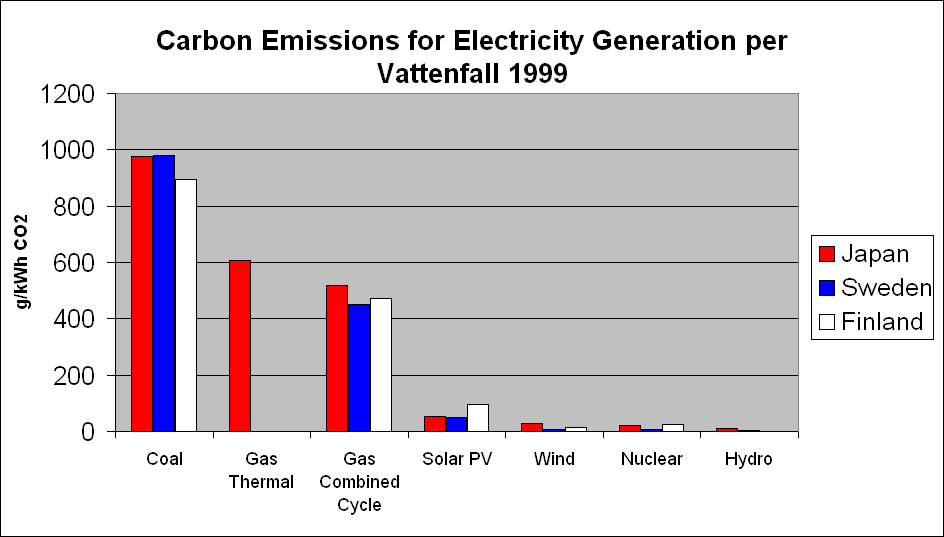
Greenhouse gases (GHGs) can be emitted through transport, land clearance, and the production and consumption of food, fuels, manufactured goods, materials, wood, roads, buildings, and services.[3] For simplicity of reporting, it is often expressed in terms of the amount of carbon dioxide, or its equivalent of other GHGs, emitted. https://en.wikipedia.org/wiki/Carbon_footprint
Tuesday, March 15, 2016
The world’s oceans – their temperature, chemistry, currents and life – drive global systems that make the Earth habitable for humankind. How we manage this vital resource is essential for humanity as a whole, and to counter balance the effects of climate change. Over three billion people depend on marine and coastal biodiversity for their livelihoods. However, today we are seeing 30 percent of the world’s fish stocks overexploited, well below a level at which they can produce sustainable yields. Marine and coastal research are very important.
http://www.undp.org/content/undp/en/home/sdgoverview/post-2015-development-agenda/goal-14.html

Goal 14: Life below water
Delegating work and pushing back when your plate is too full is a smart way to avoid burnout. But how can you tell your boss, "That's not my job," and still prove that you are a team player?
How Can I Say "That's Not My Job" Without Sounding Rude?
A successful sustainable development agenda requires partnerships between governments, the private sector and civil society. These inclusive partnerships built upon principles and values, a shared vision, and shared goals that place people and the planet at the centre, are needed at the global, regional, national and local level. Urgent action is needed to mobilize, redirect and unlock the transformative power of private resources to deliver on sustainable development objectives. Long-term investments, including foreign direct investment, are needed in critical sectors, especially in developing countries.


Sunday, March 13, 2016


Sometimes our leaders do not know how to assess the impact of our ideas and actions taken. In this case research have carried out since 1980s and published in the international journals, the ideas taken up by public and reported in the news papers, attracted government agencies (in this Sepang River case both Negeri Sembilan Government and Selangor Government responded), demand for immediate actions by all agencies to keep Sepang River clean.

Thursday, March 10, 2016

The Sepang Besar River needs clean waters to nurture mangroves and wildlife such as this little heron. Once badly polluted, the Sepang Besar River is recovering. It’s greenish-blue brackish water today supports a thriving mangrove forest. Yet, 20 years ago, it was as good as dead.


http://www.star2.com/living/living-environment/2015/06/15/once-dead-sepang-besar-river-comes-back-to-life/


