Monday, October 2, 2017
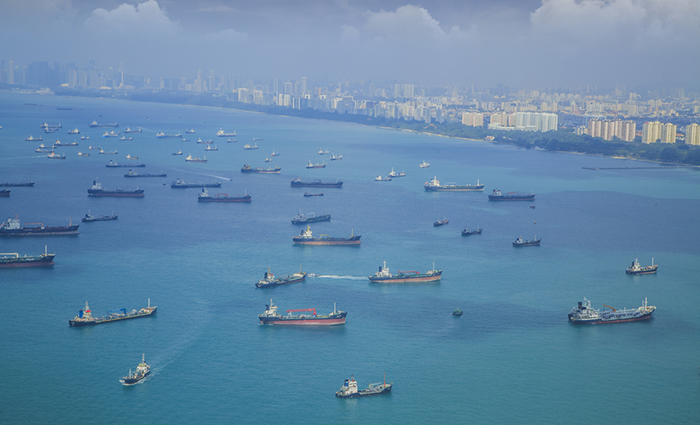
Total ship traffic through the Malacca and Singapore Straits of all types and sizes averages more than 150 vessels per day in 2011, of which half are ships with sizes of more than 5,000 grt, while those exceeding 30,000 grt make up over 10% of the total. In 1994, 1995 and 1996, the number of vessels passing the One Fathom Bank Lighthouse was 34,446, 30,251 and 31,672 respectively, excluding vessels stopping at Port Klang and fishing vessels. About 35% of these were oil tankers, i.e., 11,069, 8,915, and 9,815 respectively. Thus, an average of 30.3, 24.4 and 26.9 oil tankers per day passed through this section of the Straits in 1994-1996. More than 60% of these tankers were larger than 200,000 grt. Traffic in and out of the port of Singapore is particularly heavy. A ship either enters or leaves Singapore harbor on an average of every two minutes. In 1996, 117,723 vessels called at Singapore for an average of 9,000 vessels per month. Traversing Singapore Strait to enter or leave the port is like crossing a busy intersection without traffic lights

Tankers, including VLCCs, are second largest users of the Strait for transits. Last year VLCC transits grew 6.6% to 5,324, outstripping an average growth of 4% a year since 2005. This equates to 15 tankers a day on average transiting the narrow deep water route. In 2015 on average 222 vessels over 300 gt transited the Strait of Malacca per day, compared to 217 per day in the previous year.

http://www.seatrade-maritime.com/news/asia/malacca-strait-transits-grow-2-to-record-in-2015-boxships-see-dip-in-h2.html

One of the world's busiest waterways roughly one-third of global shipping traffic tranists the Malacca Strait.

Tankers, including VLCCs, are second largest users of the Strait for transits. Last year VLCC transits grew 6.6% to 5,324, outstripping an average growth of 4% a year since 2005. This equates to 15 tankers a day on average transiting the narrow deepwater route.
Coastal erosion is another main problem in many countries in the world. We need to do more research and development to protect, reclaim and conserve the coastal ecosystems. the picture below is from south of Parit Jawa Johor. Many factors need to be considered. Since the Straits of malacca at this point is narrower compared to the northern area, shiping activities need to be take into account too.


Sunday, October 1, 2017


Subscribe to:
Posts (Atom)