Tuesday, November 6, 2018

more articles on Cameron highlands. We should stop talking on this after 2020. complete actions need to be done immediately and cannot be short term solution.

Image may contain: 2 people
Image may contain: 3 people, including Ahmad Ismail

Image may contain: one or more people

Why Cameron Highlands continue to have same isuues every year, landslides and flood. That what we can see But what happened to chemical pollution that we cannot see?

No automatic alt text available.
https://www.facebook.com/photo.php?fbid=10202157261533463&set=a.3016482471522&type=3&theater
Image may contain: 1 person

Four years a go we are talking ,loud on Cameron Highlands. What actions we take after long discussion at all levels. In fact it is annual event in Cameron Highlands.

Image may contain: 2 people, including Ahmad Ismail
https://www.facebook.com/photo.php?fbid=10202135798996913&set=a.3016482471522&type=3&theater

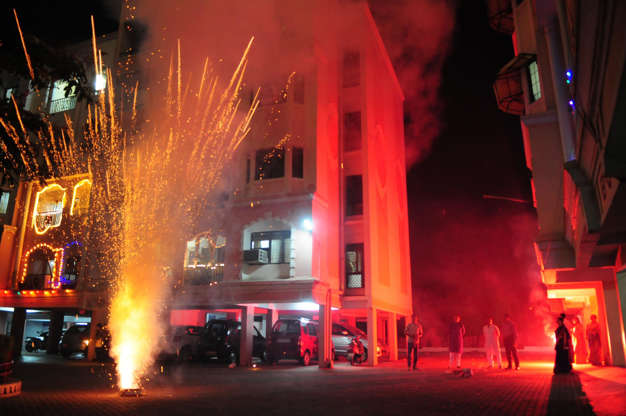
Anything to do with China and India involving festival rules and regulations mus be enforced, This is is due to the high population and might effect to the world pollution. This was highlighted in the UTUSAN MALAYSIA sometimes a go.

https://www.msn.com/en-my/news/event/facts-about-pollution-caused-by-diwali-firecrackers/ss-BBPlO1i#image=1
Lighting up crackers during the festival of Diwali has been practiced as a tradition since ages. The thrill from sparklers, bombs and rockets may last a few seconds, but it leaves a toxic residue of pollutants in the air which is harmful for children and adults alike. Click through to check out some hard facts about pollution caused by Diwali firecrackers. 
Slide 2 of 11: BHOPAL, INDIA - NOVEMBER 11: People celebrate as they burst crackers on the occasion of Diwali, the festival of Lights, on November 11, 2015 in Bhopal, India. Diwali is an ancient Hindu festival celebrated in autumn (northern hemisphere) or spring (southern hemisphere) every year. Diwali is one of the largest and brightest festivals in India. The festival spiritually signifies the victory of light over darkness, knowledge over ignorance, good over evil, and hope over despair. Its celebration includes millions of lights shining on housetops, outside doors and windows, around temples and other buildings in the communities and countries where it is observed. Pollution level during Diwali night was higher than average due to bursting of firecrackers. (Photo by Mujeeb Faruqui/Hindustan Times via Getty Images)

Wednesday, October 31, 2018

Malayan Nature Society Aiming for Ramsar Site since 2014. Since then MNS working out all the procedures and criteria to meet as the Ramsar Site. Local authority MDKS will proceed with the State Government. MNS hope Selangor Government will accept the proposal and move forward towards Ramsar Sites the first in Selangor and near to Kuala Lumpur. In fact MNS want to add Kuala Gula and Teluk Air Tawar too as the NEW Ramsar Site.

https://www.thestar.com.my/news/nation/2014/02/12/ksnp-aiming-for-ramsar-recognition-approval-will-make-park-countrys-eighth-certified-site/
Kuala Selangor Nature Park manager Michael Isthyben Sawairnathan showing the mudflats which waterbirds normally flock to feed. NORAFIFI  EHSAN/ The Star

another conflict on science, poor, business and rules and regulations. Public, Government Officers and Politician must be educated. Everybody want food, enough and easy. Nature already provide enough food for the future generation.

https://www.malaysiakini.com/news/449729
Coral reefs, as vital to tropical fish as trees are to birds, are becoming more vulnerable to a process called "bleaching," which occurs when a spike in water temperatures causes coral to expel the algae that provide their kaleidoscope colours, leaving them prone to starvation or disease. Today, swaths of the once-psychedelic Great Barrier Reef in Australia have turned boneyard white and largely devoid of life.
Scientists fear a similar fate could await the Coral Triangle, a huge underwater wonderland east of Borneo endowed with a trove of biodiversity comparable to the rainforests of the Amazon Basin. Millions of people depend on its bounty to survive, a large share of them Malaysians, who eat an average of 57kg of fish each a year - more than double the world average.
The appetite for farmed species is so voracious, almost 20 percent of the annual catch from the world's seas is ground into fishmeal, a nutrient-rich powder that forms the basis of the feeds used from salmon cages in Scottish lochs to shrimp ponds on Borneo. Vast amounts of fish have been taken from poorer countries to feed species destined for the plates of wealthier consumers. In addition, shrimp farms, in particular, have made coastal communities in the tropics even more vulnerable by cutting down mangroves, their first line of defence against extreme weather and rising sea levels.
Since the mid-1970s, the aquaculture industry has led to the destruction of more than 1.3 million acres of mangroves spread across Indonesia, Thailand, Vietnam, India, Bangladesh, China, Brazil and Ecuador, according to a 2013 paper in the Bulletin of Marine Science. Untreated waste and epidemics of shrimp-killing diseases mean the gains can be short-lived: A study published this year identified more than half a million acres of abandoned shrimp ponds in Indonesia alone.

Tuesday, October 30, 2018